
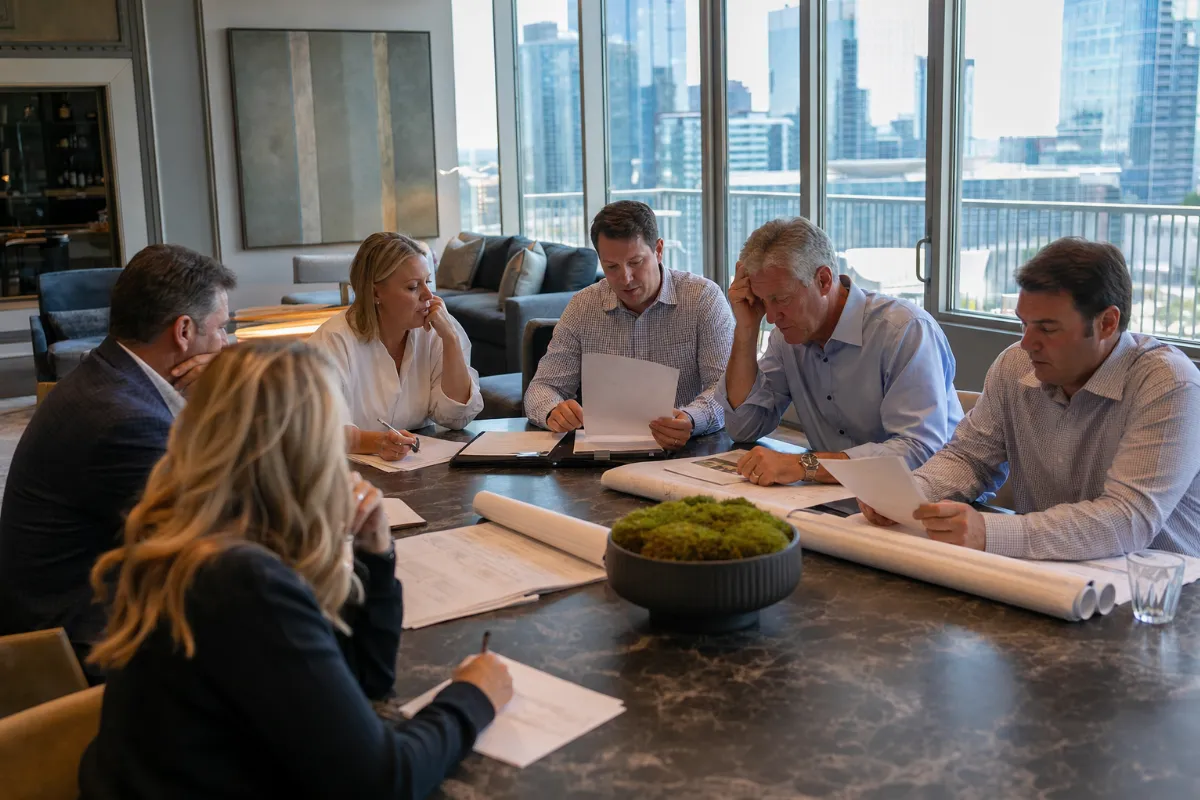
For a Nashville condominium board, the Tennessee Condominium Act is not just a legal reference. It affects meeting notices, board authority, records access, budgets, assessments, reserve planning, common-element maintenance, and what owners expect from day-to-day association operations.
This guide is a practical overview for volunteer directors, not legal advice. Boards should ask association counsel to interpret the statute, declaration, bylaws, amendments, rules, contracts, insurance policies, and any facts specific to the building.
Quick answer: The Tennessee Condominium Act of 2008 gives many Tennessee condo associations a framework for association powers, board authority, meetings, budgets, assessments, records, disclosures, insurance, and common-element upkeep. For Nashville high-rise boards, the best way to use it is as an operations checklist, then confirm legal interpretation with association counsel before acting.
Why the Tennessee Condominium Act Matters for Board Operations
Condo boards often hear broad references to Tennessee HOA laws, but condominium associations are not the same as subdivision HOAs. A condominium is built around units, common elements, limited common elements, a declaration, bylaws, allocated interests, shared building systems, and an association that manages common responsibilities for all unit owners.
The Act says that the Tennessee Condominium Act of 2008 applies to condominiums created in Tennessee after January 1, 2009. It also lists specific sections that apply to pre-2009 condominiums for events and circumstances after January 1, 2009, with important limits tied to existing master deeds, bylaws, declarations, and plats. Boards can review that applicability language in Tennessee Code section 66-27-202, but counsel should confirm how it applies to a particular community.
For a high-rise association, that distinction matters. A board may be working from older governing documents, newer statutory provisions, recorded amendments, local Nashville code requirements, lender requests, insurance obligations, and resident expectations at the same time.
The Act should not be read in isolation. A board’s practical checklist should include:
The declaration or master deed
Bylaws and recorded amendments
Rules and regulations
Board policies and resolutions
Management agreements and vendor contracts
Insurance policies and claims procedures
Reserve study and capital planning documents
Metro Nashville code and permit requirements when work affects the building
1. Association Powers: What the Board Can Organize
The Act gives the unit owners’ association several operating powers, subject to the declaration and statutory limits. Those powers include adopting and amending bylaws, rules, budgets for revenues, expenditures, and reserves; collecting assessments; hiring managing agents and contractors; making contracts; regulating common elements; imposing certain charges; and exercising powers needed for association governance and operation. Boards can review the list in Tennessee Code section 66-27-402.
In plain language, this is the operating backbone of condo association management. It is what allows the association to approve a budget, engage a management company, coordinate maintenance vendors, adopt common-area rules, collect assessments, and respond to building needs.
It does not mean the board can do anything it wants. The statute repeatedly points back to the declaration, bylaws, owner voting requirements, and specific statutory limits. When an issue involves leasing restrictions, major amendments, fines, common-element changes, special assessments, or owner rights, the board should involve association counsel early.
2. Condo Board Responsibilities Tennessee Directors Should Track
Under the Act, the board generally may act on behalf of the association except where the declaration, bylaws, or statute require something else. Tennessee Code section 66-27-403 says elected board members must exercise ordinary and reasonable care, while declarant-appointed directors are held to the care required of fiduciaries of unit owners.
That is the legal framework. Operationally, board work should be organized around repeatable responsibilities:
Adopt the annual operating budget and monitor actual results against it
Review assessment levels, delinquencies, and cash flow
Keep financial and association records organized
Hold required association meetings and give proper notice
Maintain common elements according to governing documents and law
Coordinate insurance, claims, contracts, and vendor performance
Communicate board decisions clearly to owners and residents
Refer legal questions to association counsel rather than guessing
The board also has limits. Section 66-27-403 says the board may not act on behalf of the association to amend the declaration, terminate the condominium, or elect board members or determine board qualifications, powers, duties, or terms of office, except where the statute allows specific vacancy or master association actions. Those are governance decisions where boards should slow down and get legal guidance.
3. Meetings and Owner Communication
The Act requires at least one association meeting each year. It also says special meetings may be called by the president, a majority of the board, or unit owners with 20 percent of the votes in the association, unless the bylaws specify a lower percentage. Notice generally must be given not less than 10 and not more than 60 days before a meeting, and the notice must include the time, place, method of attendance, and agenda items, including proposed amendments, budget changes, and proposals to remove a director or officer. Boards can review the details in Tennessee Code section 66-27-408.
For Nashville condo boards, this is not only a compliance task. Meeting notices and agendas are part of resident trust. Owners are more likely to understand assessment changes, maintenance disruptions, amenity rules, and capital needs when they can see that the board is using a regular process.
A good operating practice is to maintain a yearly governance calendar that includes:
Annual meeting timing
Budget review and approval schedule
Insurance renewal dates
Reserve study review dates
Contract renewal deadlines
Recurring maintenance and inspection dates
Regular board meeting and owner communication windows
4. Tennessee Condo Association Records
Recordkeeping is one of the most practical duties in the Act. Tennessee Code section 66-27-417 says the association must keep financial records detailed enough to comply with the Act’s disclosure sections, and that financial and other records must be made reasonably available for examination by unit owners, mortgage or deed of trust holders, and their authorized agents.
That does not answer every operational question. Boards still need counsel-approved policies for how requests are submitted, what records are available, what information must be redacted, how privacy is protected, when electronic access is appropriate, and what reasonable copying or administrative charges may apply.
For day-to-day management, Tennessee condo association records should usually be organized so the board can locate:
Governing documents and amendments
Approved budgets and financial statements
Bank, reserve, assessment, and delinquency reports
Meeting notices, agendas, minutes, and votes
Vendor contracts, certificates of insurance, and invoices
Maintenance logs, inspection records, and service reports
Insurance certificates, policies, claims, and deductibles
Owner requests, architectural requests, violations, and hearing records where applicable
Record access is a legal topic, but poor organization turns it into an operational problem. If the board cannot find records quickly, responses become inconsistent and stressful.
5. Budgets, Assessments, and Financial Disclosures
The Act gives the association power to adopt budgets and collect assessments, and Tennessee Code section 66-27-414 says assessments must be made at least annually after the board has made a common expense assessment, based on a budget adopted at least annually by the board. It also addresses allocation of common expenses, limited common element expenses, certain benefited-unit expenses, misconduct-related expenses, and assessments to preserve the physical integrity of the condominium or comply with governmental requirements.
The Act’s disclosure section also matters for condo association budget requirements. When the required information is requested under the Act, Tennessee Code section 66-27-503 lists information that includes the most recent balance sheet, income statement, and approved budget, or a projected budget if one has never been approved. The budget disclosure must include reserve information, projected common expense assessments, the method of calculating unit shares, indebtedness secured by common elements or amenities, and leases affecting common elements or amenities.
Budget documents may also matter during unit sales and financing. Fannie Mae’s Full Review process requires lenders to confirm that a condo project meets applicable eligibility requirements, and its guide includes project documentation and replacement reserve study topics for condo review. Boards can review the current Fannie Mae Full Review guidance with counsel, management, and accounting support when owner resale questions involve association information.
For a high-rise board, the budget should not be treated as a once-a-year spreadsheet. It should connect operating costs, building systems, staffing or service levels, insurance, utilities, maintenance contracts, reserves, owner communications, and capital planning. Boards that want a stronger monthly review process may find it useful to compare their current reports with professional HOA accounting services.
6. Common Elements, Maintenance, and Reserves
Condo maintenance responsibilities Tennessee boards face often start with one sentence in the Act. Tennessee Code section 66-27-407 generally makes the association responsible for maintenance, repair, and replacement of the common elements, while each unit owner is responsible for the owner’s unit, except as provided by the declaration, certain statutory provisions, or insurance-related repair provisions.
In a high-rise building, common elements may involve elevators, corridors, lobbies, structural components, roofs, garage areas, amenity areas, risers, pumps, mechanical systems, fire and life-safety components, access systems, and exterior components. Limited common elements may require separate review under the declaration.
Metro Nashville’s local requirements also affect building operations. Metro publishes an adopted codes list for building, mechanical, plumbing, electrical, accessibility, energy, and related codes, and Metro property standards guidance says buildings must meet minimum maintenance standards and exterior property must be maintained in a clean, safe, and sanitary condition through its property standard violation guidance.
Reserve planning is now a central board task for many condominium associations. Section 66-27-403 requires certain boards overseeing common elements with an aggregate replacement cost over $10,000 to have or update reserve studies on the statutory schedule, make the reserve study available to common interest owners by email or community website, and review reserve funding annually for adequacy. Boards should confirm applicability with counsel, especially for older condominiums and declarant-controlled situations.
Industry guidance points in the same practical direction. The Foundation for Community Association Research notes that aging infrastructure, rising costs, insurance pressures, and regulatory requirements make proactive planning important, and its Built-to-Last report identifies building systems, maintenance, reserve funding, governance, insurance, legal compliance, and disaster preparedness as core factors in long-term community viability.
For operations, the maintenance plan should connect to the reserve study. A maintenance ticket today may show that a component is wearing faster than expected. A reserve study may show that a major project needs advance owner communication. A building inspection may affect both the operating budget and capital plan. Boards can review practical scope questions in our guide on what building maintenance services include and broader building maintenance services.
7. A Simple Board Operations Checklist
The statute is detailed, but a board can turn it into a workable operating rhythm. The goal is not for volunteer directors to become lawyers. The goal is to know what questions to ask and what records to keep.
| Board area | Practical action | Who should review |
|---|---|---|
| Authority | Confirm whether the action is allowed by the Act, declaration, bylaws, and rules. | Association counsel and board |
| Budget | Adopt an annual budget, track actual results, and document reserve assumptions. | Board, management, accounting support |
| Records | Keep financial, meeting, contract, maintenance, insurance, and disclosure records organized. | Board, management, counsel for access policy |
| Maintenance | Separate unit, common element, and limited common element responsibilities before assigning cost. | Management, maintenance vendors, counsel when unclear |
| Communication | Use clear notices, meeting agendas, project updates, and owner response procedures. | Board and management |
A board preparing for the next year should take these steps:
Ask counsel to confirm which Tennessee Condominium Act sections apply to the property.
Create a governing document summary that identifies owner approval thresholds, board authority, maintenance boundaries, and notice requirements.
Build a calendar for meetings, budgets, reserve review, insurance, contracts, inspections, and communications.
Review whether financial reports support the disclosures required for owner, purchaser, and lender requests.
Compare the maintenance log with the reserve study and upcoming capital needs.
Update resident-facing procedures for work orders, records requests, amenity notices, access, and emergency communication.
If the building also needs stronger continuity planning, boards can pair this legal checklist with a practical review of high-rise emergency preparedness and annual budget planning.
How Stratus Management Helps Nashville Condo Boards
Stratus Management is a residential property management company in Nashville, Tennessee. We manage condominium and homeowners’ associations, with a focus on high-rise and luxury residential buildings.
We do not provide legal advice, and we do not replace association counsel. Our role is to help boards organize the operational side of association management so legal requirements, board decisions, financial reporting, maintenance follow-up, and resident communication do not become disconnected.
That can include association management, accounting services for associations, building maintenance services, and concierge management services. For a Nashville condo board using the Tennessee Condominium Act as an operations checklist, the work often includes organizing board calendars, owner communications, financial reporting routines, maintenance coordination, vendor follow-up, and resident-facing procedures. You can see more about our services on What We Offer.
If your board is reviewing its governing documents, budgeting process, records organization, or condo maintenance responsibilities, Stratus Management can help organize the management process while your attorney handles legal interpretation. To talk through whether our services fit your building, request a proposal through Get Proposal or contact us through Contact Us.
The Tennessee Condominium Act is easier to manage when the board has clear records, a practical calendar, reliable financial reporting, and a maintenance process tied to the building’s real needs. If your Nashville association is ready to improve that structure, please contact Stratus Management.